 TuckBook
Сказки на ночь
TuckBook
Сказки на ночь
The Grey Feathers Found Home
Thistle wishes her grey feathers were bright like her siblings’ yellow down, until dusk reveals that her colour can guide the family safely home. A gentle evening tale about finding the special use for being yourself.
✦ Страницы сказки
5 минут чтения
The Grey Feathers Found Home
1 / 7
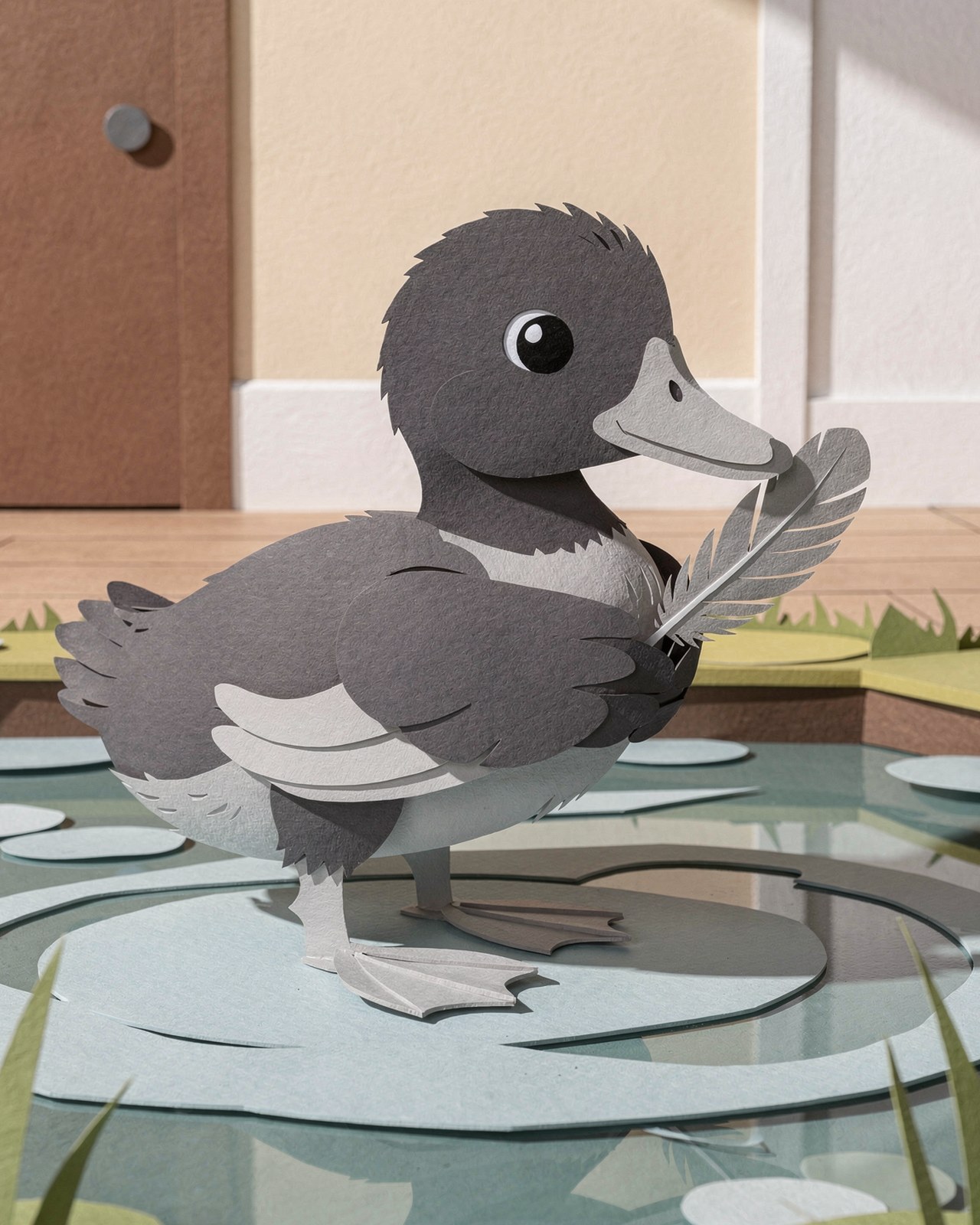
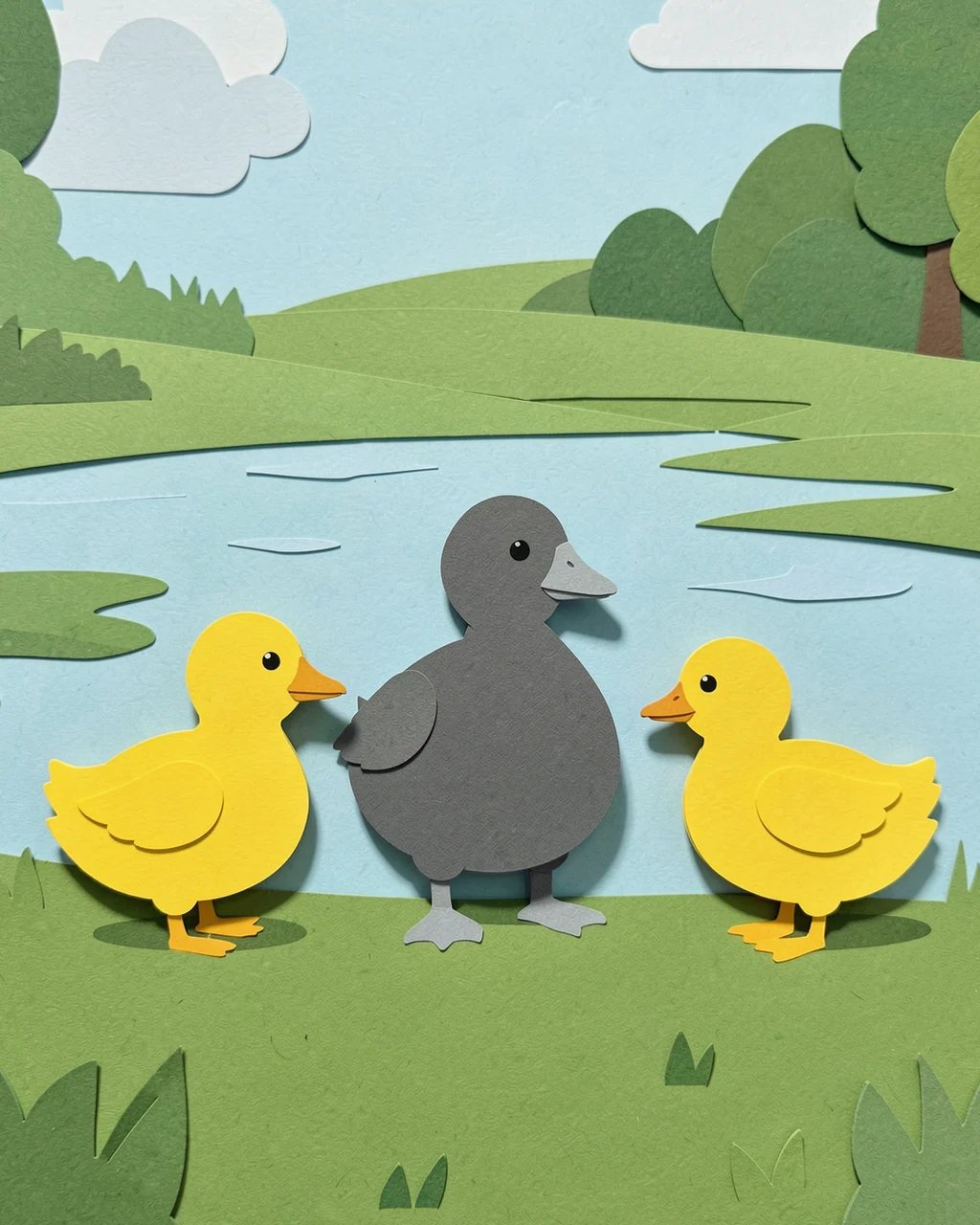
Thistle peered at one soft grey feather poking out from her wing. Beside her at the duck pond, her brothers and sisters bobbed in a bright yellow row. They looked like little drops of sunshine floating on the water. Thistle looked like a rain cloud that had fallen in by mistake.
All day, Thistle tried to discover why grey might be useful. When Mother Duck led them through the shallow water, the yellow ducklings made golden wobbles in the pond. When they climbed onto the bank, their yellow feathers shone against the green grass. Thistle stood between them, feeling as if there were a quiet empty space around her.
2 / 7
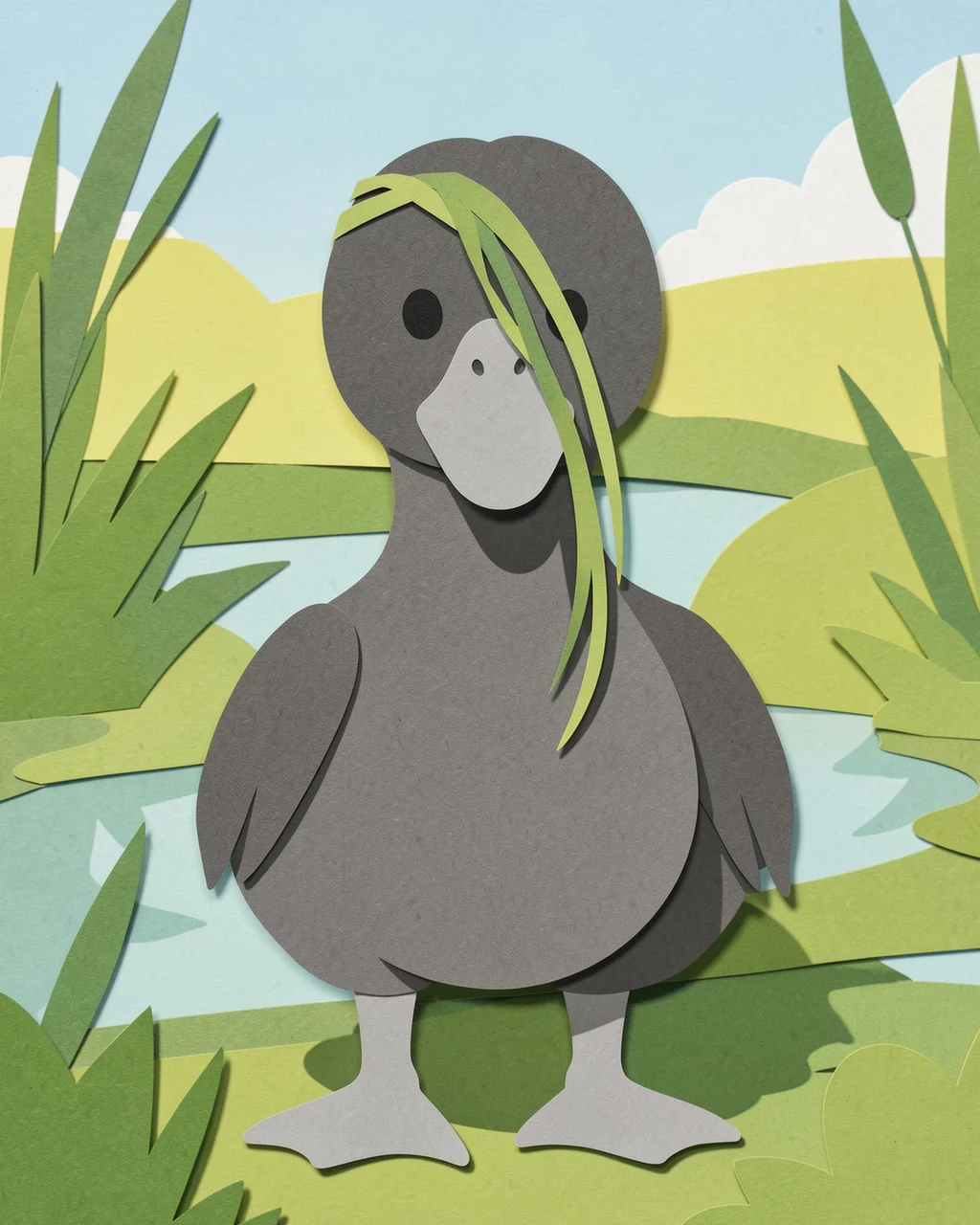
“Perhaps I can shine too,” she thought. Thistle flapped both wings very hard and splashed the pond with silver drops. For one moment, the drops sparkled. Then one plopped right onto her head. A stringy bit of duckweed slid down over her eye.
3 / 7
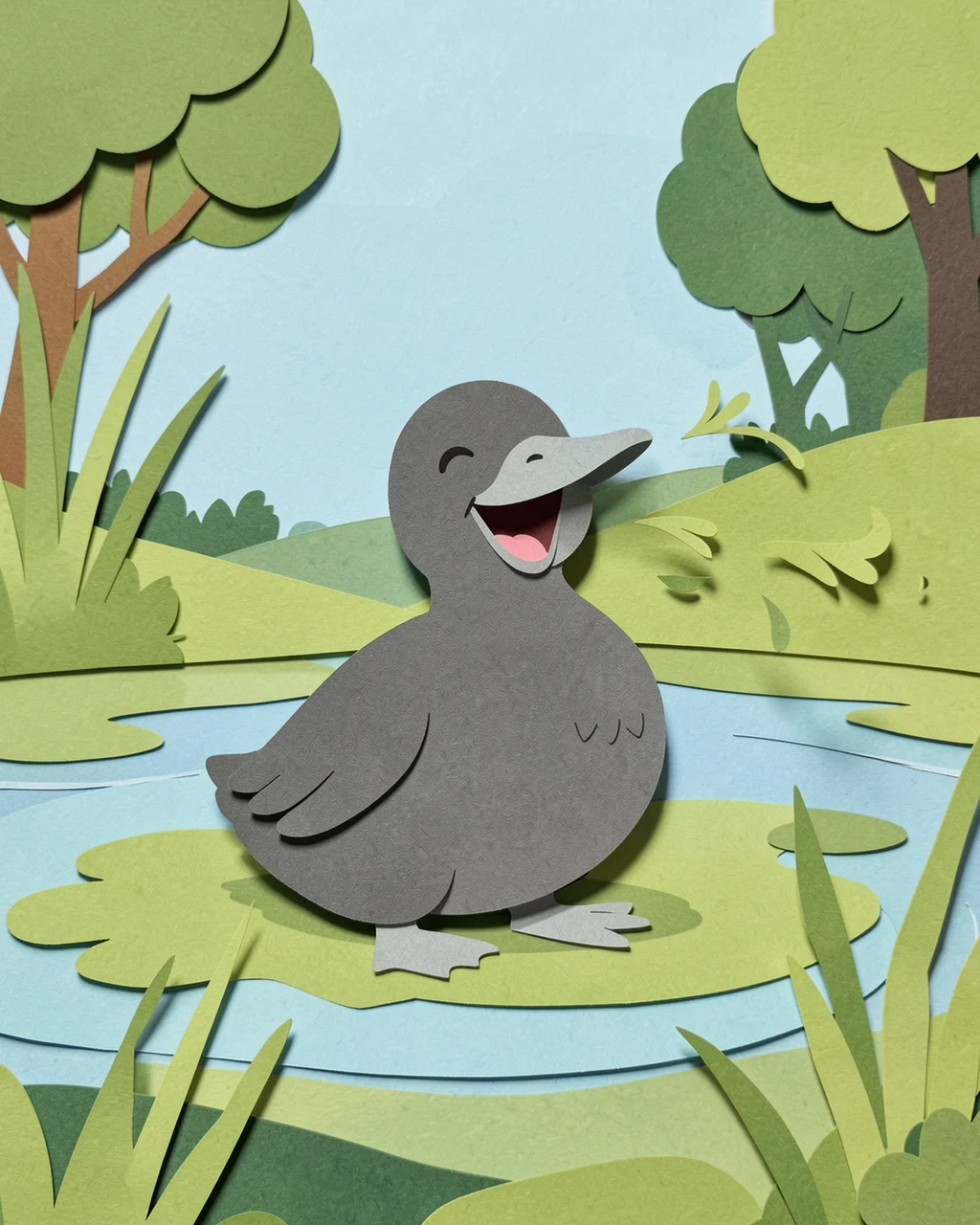
Her yellow siblings quacked and laughed, not unkindly. Thistle laughed too, after she had blinked the duckweed away. But when the ripples went flat again, she looked grey as before. “That did not work,” she muttered.
4 / 7
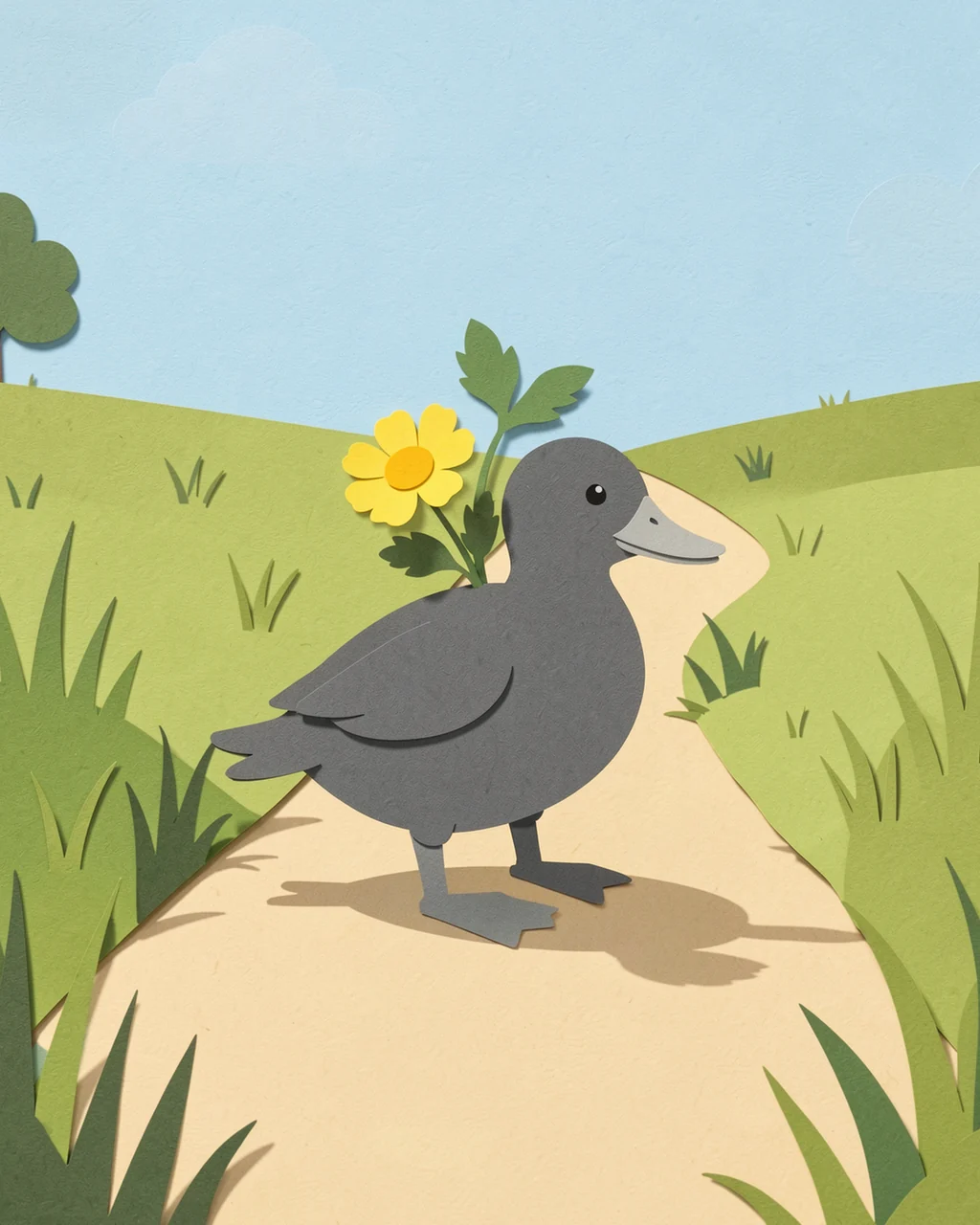
Later, the family waddled along the meadow path to nibble at tender grass. Thistle found a yellow buttercup lying loose in the path. Carefully, she balanced it on her back. “Now I match,” she said. She took three proud steps. A breeze lifted the buttercup, spun it once, and dropped it on the nose of a very surprised frog.
The frog gave one enormous blink. Thistle gave a smaller one. Then she let the buttercup stay where it was. Yellow did not belong on her back, she decided. Still, she did not know what did.
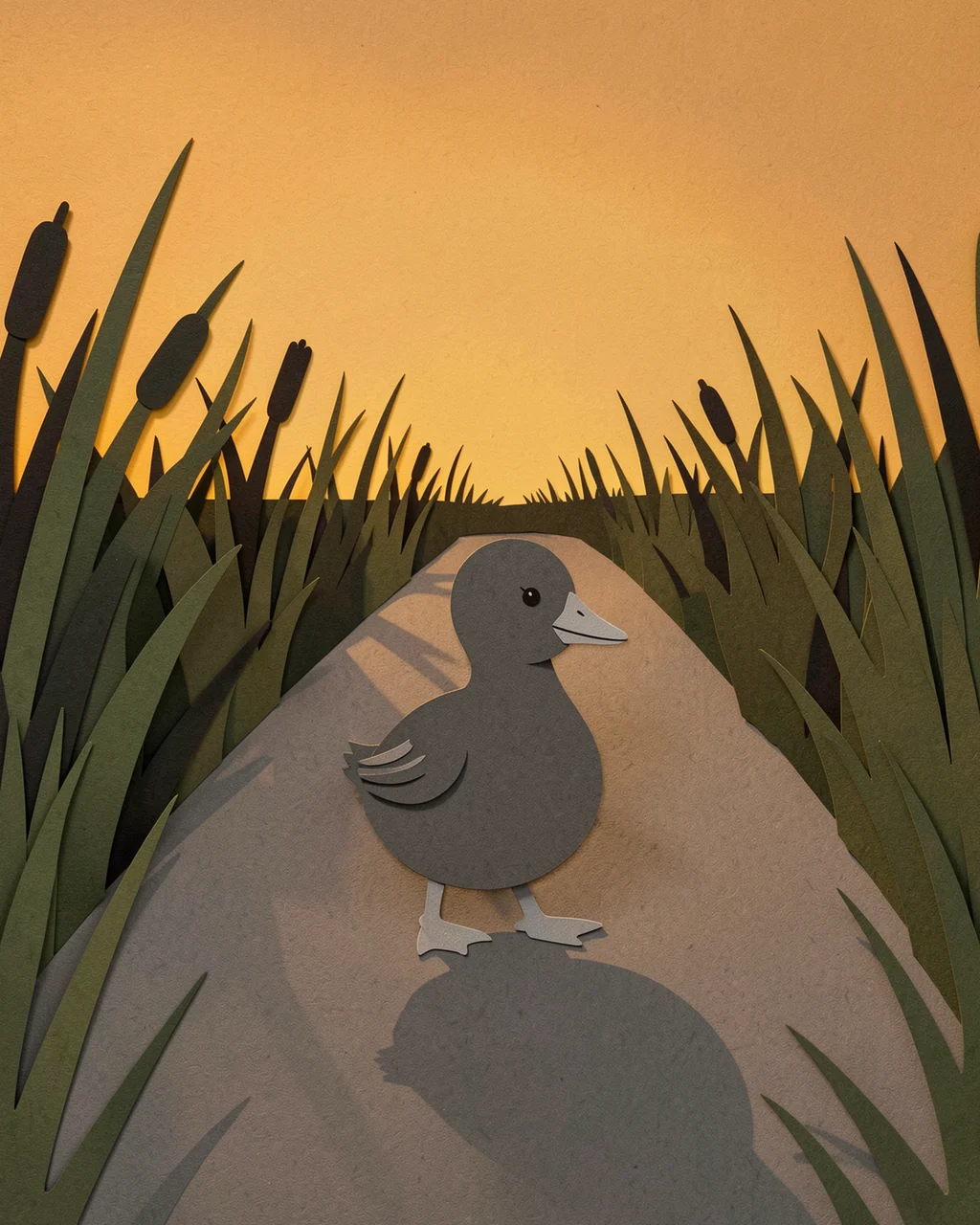
As the day grew dimmer, Mother Duck called from the edge of the meadow. “Time for the nesting area.” The ducklings hurried into their usual row. Ahead lay the path home, curving between tall grasses and reeds. In daylight it was easy to see. Now it was becoming a long, shadowy stripe.
The yellow ducklings paused. Their bright feathers were easy to spot, but the path seemed to slip away under the darkening grass. One duckling stepped toward a clump of reeds. Another turned the wrong way, toward the pond. Mother Duck gathered them close, but the little group bunched up in a worried flutter.
5 / 7
Thistle looked down. The smooth path was not green like the meadow or black like the pond water. It was grey. It was the same gentle grey as the feathers on her back. She took one step onto it, then another. Her feet found the firm, packed earth instead of the scratchy grass.
6 / 7
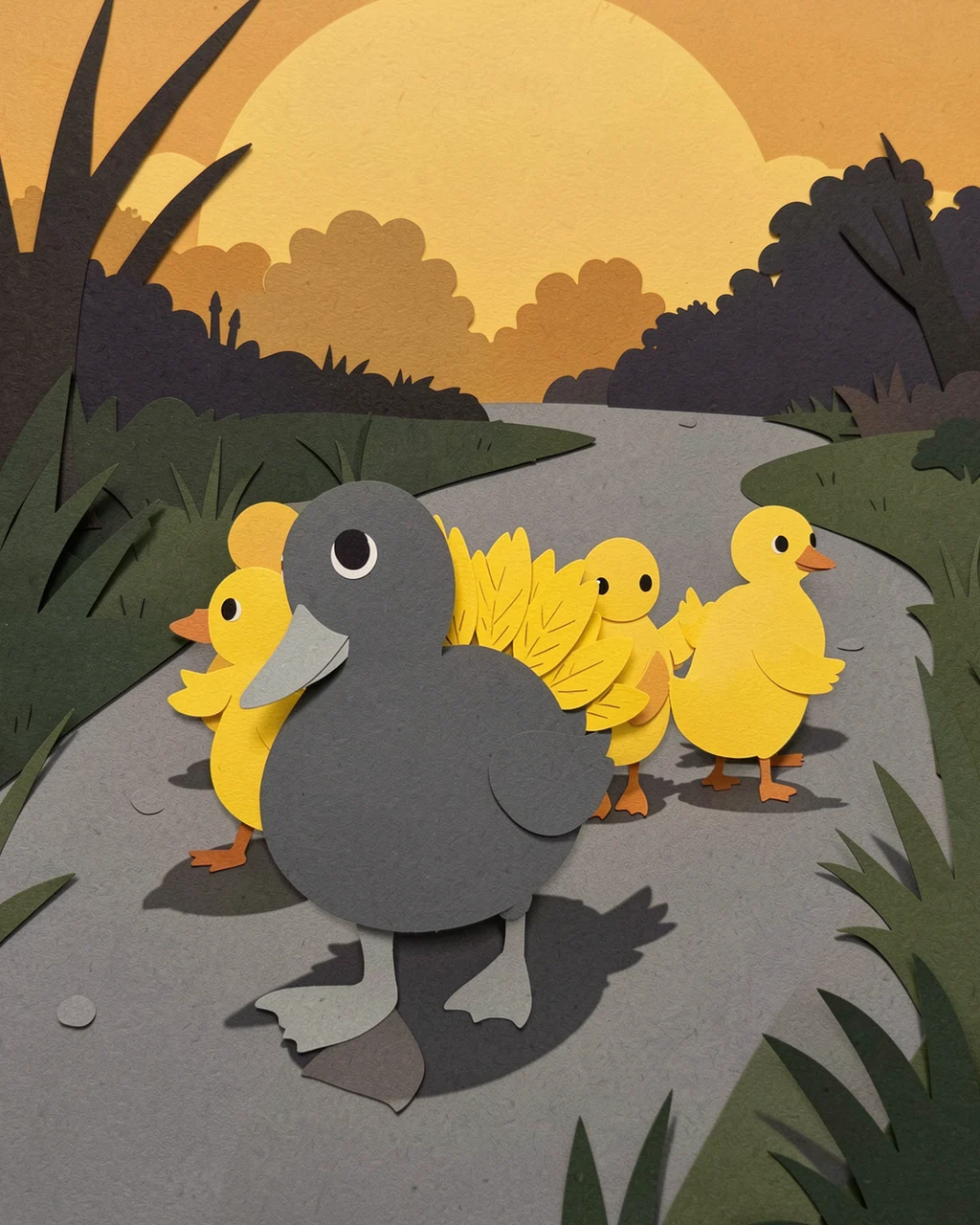
“Wait,” said Thistle. “Look for my colour.” She walked slowly along the grey ribbon of path. Her soft grey feathers made a little moving mark right in its middle. The yellow ducklings could see her clearly, close ahead of their bills. One by one, they tucked in behind her. Their yellow feathers became a shining row around Thistle’s grey back, and together they followed the path all the way to the nesting area.
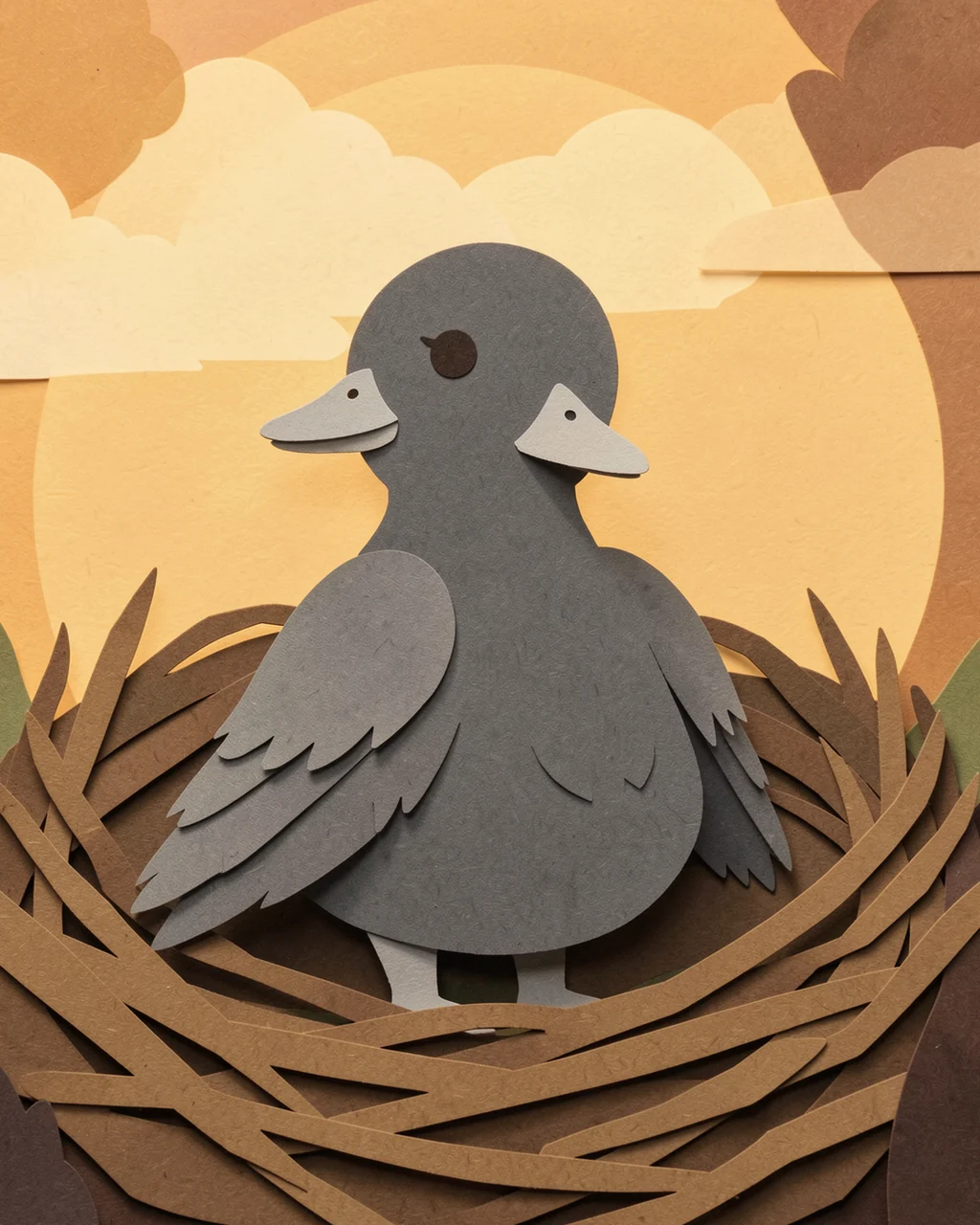
At the nest, Mother Duck settled the ducklings beneath the reeds. Thistle’s sister pressed her yellow shoulder against Thistle’s wing. “Your grey feathers showed us where to go,” she said. “And we stayed together because we could see you.”
7 / 7
Thistle looked at the grey feathers along her wings. They did not sparkle like pond drops. They did not need a buttercup on top. In the gentle evening light, they were exactly the colour of the path that had carried her family home.
После сказки Вопросы для разговора с ребёнком After reading, ask which moment felt the warmest or bravest today.
Эмоциональная задача
To end the day gently, ease tension, and strengthen a sense of safety.
Вопрос для обсуждения
After reading, ask which moment felt the warmest or bravest today.
Вопросы после чтения
- When did things begin to feel easier for the hero?
- Who or what helped with the most important step?
- What would you like to remember tomorrow?